
Last Updated: October 27, 2026
Quick Summary
Racer support is the organized network of financial, medical, and emotional assistance available to motorcycle racers after a life-altering crash. It covers financial assistance after serious accidents and emotional support for injured racers and their families. Most help falls into four buckets: insurance benefits, needs-based grants, community fundraising, and sponsor or team support.
- File insurance claims immediately, because denials can be appealed but missed deadlines usually cannot.
- Contact the sanctioning body that issued your competition license to ask about accident benefits.
- Legitimate foundations do not charge riders upfront fees to be considered for aid.
- Families should ask the hospital directly for a case manager or social worker to help with discharge planning.
- IFRRF is a 501(c)(3) non-profit with a community of over 2,000 people.
Table of Contents
- What Racer Support Actually Covers After a Severe Crash
- Financial Assistance for Injured Motorcycle Racers
- Emotional Support for Injured Athletes Through Recovery
- Help for Families of Injured Racers
- Fundraising for Injured Racers: What Works and What to Avoid
- How Racer Support Programs Verify Need and Distribute Aid
- Applying for Support From the IFRRF
- Frequently Asked Questions
What Racer Support Actually Covers After a Severe Crash
Racer support is the organized network of financial, medical, and emotional assistance available to motorcycle racers after a life-altering crash. A severe racing injury can bring rehabilitation, lost income, mounting bills, and a family trying to hold everything together.
Most of the safety conversation in racing focuses on prevention: helmets, restraints, fire-resistant gear, track medical teams. All of that matters, but prevention only tells half the story, it leaves out the rider who wore every piece of the right equipment and still got hurt badly.
That gap is where support for racers with severe injuries lives. It covers two practical fronts:
- Financial assistance after serious accidents
- Emotional support for injured racers and their families
Below, we break down what each looks like, how to spot a legitimate program, and how to apply when you are already overwhelmed.
Financial Assistance for Injured Motorcycle Racers
The first question most injured riders ask is blunt: who pays for this? Financial assistance can support injured motorcycle racers after serious accidents.
The four buckets of post-crash money
Most of the assistance available to injured racers falls into one of four categories:
- Insurance benefits you already paid for. Health insurance, supplemental accident policies, and any disability coverage attached to a racing license or sanctioning body. These are first in line because you have already paid the premiums.
- Needs-based grants from foundations. Nonprofits that support injured racers typically award grants rather than loans. Grants do not need to be repaid and usually come without restrictions on how you spend them, whether that means rent, medical copays, travel to rehabilitation, or keeping the lights on.
- Community fundraising. GoFundMe-style campaigns, benefit races, auctions, and local club efforts. Fast and flexible, but unpredictable and dependent on how well the story is told.
- Sponsor and team support. Some teams and sponsors step in with bridge payments, continued equipment support, or help covering travel to medical appointments, though this is rarely formalized in a contract.
How to sequence applications so nothing gets denied for being “too late”
A more effective sequence looks like this:
- File insurance claims immediately, even if you are unsure what is covered. Denials can be appealed; missed deadlines usually cannot.
- Contact the sanctioning body that issued your competition license to ask what accident benefits, if any, are attached. Many riders never read that part of their membership packet.
- Apply to foundations early, while you still have savings. Eligibility is usually based on need, not on having hit zero in your bank account.
- Launch a fundraiser in parallel, not after the foundation decision. Donors respond to momentum, and a fundraiser that is already running when a grant is awarded tells a stronger story.
- Keep a single folder with the accident report, medical records, bills, and proof of income. Every program asks for some version of these, and re-requesting them can take weeks.
What grants typically will and will not cover
Most racer-support foundations cover household survival costs during recovery: rent or mortgage, utilities, groceries, transportation to medical appointments, and medical copays insurance does not reimburse. Some also help with adaptive equipment or home modifications when an injury changes what a rider needs to live independently.
What grants rarely cover: race entry fees, new motorcycles or race bikes, travel to non-medical events, or anything that funds a return to competition rather than recovery. Knowing that boundary up front saves applicants from a rejection on scope rather than need.
The tax question nobody asks until April
Grants from a 501(c)(3) organization are generally treated differently from prize money or sponsorship income, but the treatment depends on how the grant is structured and what it is for. Injured riders should keep every award letter, ask the granting organization how it reports the payment, and confirm the treatment with a tax professional. This is not a reason to decline help; it is a reason to keep good records.
Watch out for these red flags
Not every program that advertises help for injured racers is legitimate. Warning signs include:
- Upfront fees to apply. Legitimate foundations do not charge riders to be considered for aid.
- Requests for your Social Security number by email or text before you have verified the organization independently.
- Promises of guaranteed approval in exchange for a cut of the award.
- No published board, no 501(c)(3) status, and no way to see how prior funds were distributed.
A legitimate program will confirm the injury, review the rider’s circumstances, and document how funds are used. That verification protects donors and applicants alike, it is a sign the organization is serious, not a sign it does not trust you.
Most post-crash assistance falls into one of four categories, each with a different source and speed.
| Type of assistance | Source | Key trait |
|---|---|---|
| Insurance benefits | Policies and license coverage already paid for | First in line; file claims immediately |
| Needs-based grants | Nonprofit foundations | Not repaid; usually no spending restrictions |
| Community fundraising | GoFundMe campaigns, benefit races, auctions | Fast and flexible but unpredictable |
| Sponsor and team support | Teams and sponsors | Bridge payments, equipment, travel help; rarely formalized |
Emotional Support for Injured Athletes Through Recovery
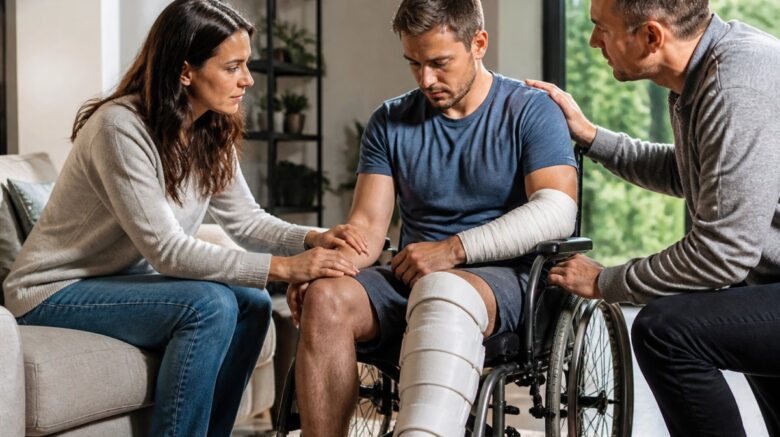
Emotional support is part of recovery after a serious racing injury.
Help for Families of Injured Racers
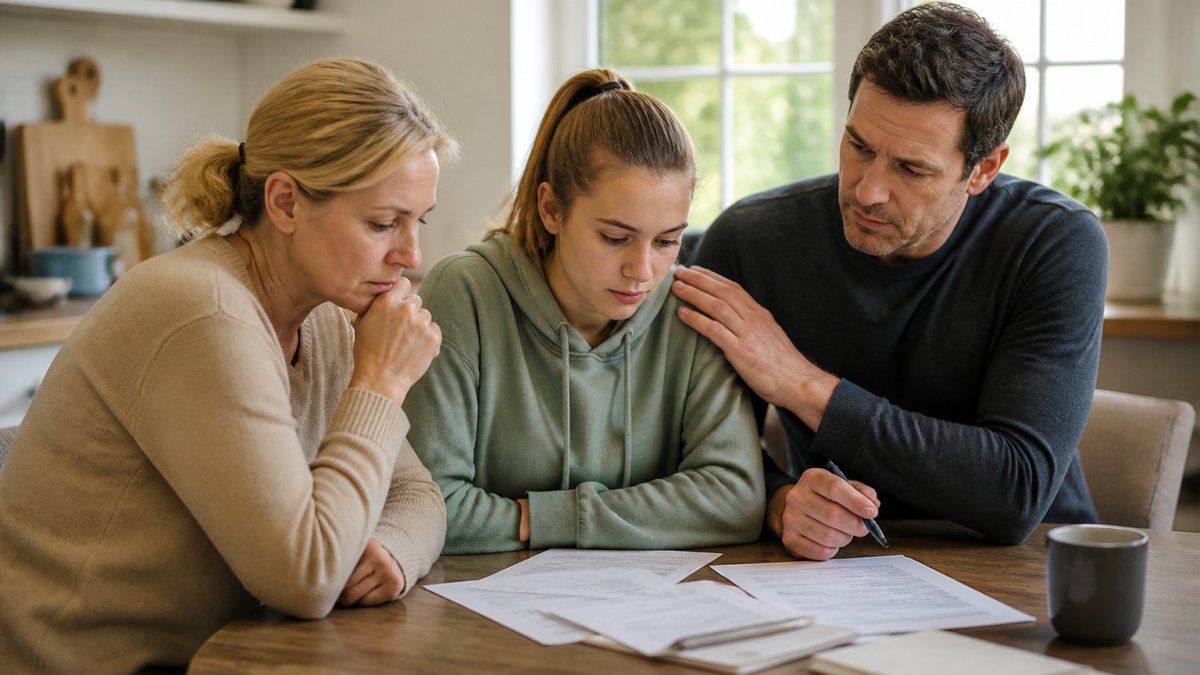
A serious racing injury can affect the rider’s family as well as the rider.
The four jobs that land on one person
In the first weeks after a severe crash, families typically absorb four distinct roles at once:
- Medical advocate. Tracking medications, talking to surgeons and case managers, and pushing back when a discharge plan does not match what the rider actually needs at home.
- Financial manager. Coordinating insurance claims, gathering bills, applying for assistance, and keeping the household solvent while income is interrupted.
- Caregiver. Handling mobility, wound care, appointments, and the daily logistics of a body that cannot do what it used to.
- Communicator. Updating extended family, the racing community, employers, and anyone else who needs to know what is happening.
Most families assign all four to one person by default, the most common path to caregiver burnout, and it is preventable.
Signs the caregiver is in trouble
Caregiver strain does not always look like a crisis. It often shows up as skipping their own medical appointments and meals, snapping over small things, withdrawing from friends and the racing community, feeling resentful and then guilty about it, or sleep loss that stretches past the first few weeks. If two or more are present, the family needs to redistribute load, not push harder. A hospital social worker can often help, and asking for one is not an admission of failure.
Practical division of labor
A workable pattern many families settle into:
- One person owns medical communication and keeps a running notebook or shared document of what each doctor said.
- A different person owns money, insurance calls, assistance applications, and bill tracking. Separating these two roles prevents either from being dropped when the other gets busy.
- A third person, often a friend or extended family member, owns updates through a group text, CaringBridge-style page, or social post so the caregiver is not answering the same question twenty times a day.
- Everyone gets one day off per week from caregiving duties, even if that means a neighbor or hired aide steps in for a few hours.
Families do not need to be heroic. They need to be organized. A shared calendar and a single notebook solve more problems than another round of encouragement.
What families can ask the hospital for
Hospitals are not always forthcoming about the resources attached to a serious injury, so families should ask directly for a case manager or social worker to help with discharge planning, equipment, and referrals; a family meeting with the care team to clarify prognosis, expected length of stay, and what home will need to look like; financial counseling from the billing office, which can often set up payment plans or screen for charity care; and a list of local respite care options so the primary caregiver can rest.
What families can apply for
Family members are often eligible for help riders do not know exists. Depending on the program, families may qualify for grants covering household expenses while the rider cannot work, travel and lodging near a hospital or rehabilitation facility, counseling or peer support for spouses, parents, and children, and school and childcare support when a parent is suddenly unavailable. Eligibility usually depends on the rider’s injury and the household’s finances, not on whether the family member was hurt, a distinction that matters, because many families assume they are not allowed to ask.
Communication with the injured rider
If you are a family member trying to figure out where to start, family support explains what assistance is available to the people surrounding an injured racer, because the rider is not the only one who needs help.
Fundraising for Injured Racers: What Works and What to Avoid
Community fundraising is one way people can support injured racers.
How Racer Support Programs Verify Need and Distribute Aid
Our community includes over 2,000 people, and IFRRF is a 501(c)(3) non-profit organization. Read The Donor Bill of Rights for assurance on how aid and donations are handled ethically. Become a member to understand how our support structure works.
Applying for Support From the IFRRF
IFRRF provides financial and emotional support to professional motorcycle racers and their families following serious or fatal accidents. Contact us with any questions about your application. Get involved to learn how to apply.
A severe racing injury should not force a rider to choose between recovery and keeping a roof overhead. If you or someone you love is facing that choice, IFRRF is built to help, with financial assistance after serious accidents, emotional support for injured racers and their families, and a community of over 2,000 people who understand the sport from the inside. We are a 501(c)(3) organization, and every dollar is handled with the transparency riders and donors deserve. Get started with IFRRF and let the racing community help you rebuild.
Frequently Asked Questions
What support is available to motorcycle racers after a serious injury?
IFRRF provides financial and emotional support to professional motorcycle racers and their families following serious or fatal accidents. Ask any program what it covers before you apply.
How can injured racers get financial help during recovery?
IFRRF provides financial assistance to professional motorcycle racers and their families following serious or fatal accidents.
Is it too late to ask for help if my crash happened a while ago?
IFRRF provides support following serious or fatal accidents.
How can the racing community help an injured rider?
Fundraising for injured racers works best when it is specific: name the expense, set a clear goal, and share updates. Friends can also help in quieter ways, such as driving a rider to appointments, covering a meal, or simply calling. Community support is not only about money. Consistent presence from people who understand the sport matters just as much during a long recovery.
