

Last Updated: October 24, 2026
Quick Summary
Racing injury aid distributed through insurance policies, non-profit organizations like IFRRF, and community fundraising, with each source covering different expenses and following separate eligibility rules and timelines. Insurance handles acute medical treatment, while non-profit aid and community fundraising cover rehabilitation, mental health support, lost income, and living expenses during recovery.
- Apply to all three funding sources in parallel the same week rather than waiting for sequential decisions.
- Document the financial gap between insurance coverage and actual expenses, not just gross injury costs, to strengthen aid applications.
- Phased distributions require ongoing paperwork with receipts and progress updates submitted at each milestone, not just at initial application.
- Non-profit aid typically prioritizes catastrophic injuries, documented financial gaps, and riders with dependents when funds are limited.
- Insurance may reduce payouts by amounts received from other sources, so review coordination-of-benefits clauses before assuming multiple payments will stack.
Table of Contents
- What Racing Injury Aid Means and Who Provides It
- How to Apply for Injury Assistance
- Step 1: Report the injury and preserve evidence immediately
- Step 2: Confirm which track you qualify for
- Step 3: Assemble the documentation packet
- Step 4: Submit to each source in parallel, not in sequence
- Step 5: Track decisions, respond to requests, and appeal denials
- Step 6: Confirm how and when funds will actually be paid
- Financial Help for Injured Racers: Distribution and Allocation
- Support for Families of Injured Racers
- Community Fundraising for Injured Athletes
- Types of Expenses Covered and What Aid Actually Reaches Recipients
- Frequently Asked Questions
What Racing Injury Aid Means and Who Provides It
The IFRRF is a 501(c)(3) non-profit dedicated to helping professional motorcycle racers rebuild their lives after catastrophic injuries.
IFRRF is a specialized racing community resource, mobilizing financial assistance and emotional support after a life-altering injury.
Insurance proceeds follow claim submission and policy terms.
A rider might receive insurance payouts, IFRRF grants, and community donations simultaneously, each with different timelines, eligibility rules, and documentation requirements.
How to Apply for Injury Assistance
Applying for racing injury aid differs by funding source. The most common failure point is treating insurance, non-profit aid, and community fundraising as one process, they are three separate tracks with different eligibility rules, evidence standards, and decision timelines. These steps apply whether you are a rider, a crew member, or a family member filing on someone’s behalf.
Step 1: Report the injury and preserve evidence immediately
Before any application, create a clean record of what happened:
- The incident report or referee/sanctioning-body accident report from the event
- Emergency room, trauma center, or trackside medical records
- Photographs of the injury, the scene, and damaged equipment
Insurance carriers and aid organizations treat contemporaneous records as more credible than records assembled weeks later. If you can’t gather these, ask a family member or team manager to do it within 72 hours.
Step 2: Confirm which track you qualify for
Eligibility is not uniform. A common pattern:
- Sanctioning-body insurance: available to licensed competitors and registered crew who were injured at a covered event. Check whether the policy is primary or secondary to your personal health insurance.
- Non-profit rider aid: typically limited to professional or licensed racers, sometimes with a minimum competition history. Family members may apply on the rider’s behalf with a power of attorney or signed authorization.
- Community fundraising: open to anyone the community chooses to support, but the funds are usually paid to the injured person or a designated family representative, not to medical providers directly.
Crew members, mechanics, and track workers should not assume rider-focused aid covers them, ask each organization whether your role is eligible before applying.
Step 3: Assemble the documentation packet
Most organizations ask for the same core set. Prepare it once and reuse it:
- Medical documentation: admission records, operative reports, imaging results, and a treating-physician statement describing the injury and expected recovery period.
- Proof of participation: race license, sanctioning-body registration, event entry confirmation, or team contract.
- Financial documentation: itemized medical bills, explanation-of-benefits statements from insurance, and a written estimate of lost income from missed events or canceled sponsor obligations.
Applicants commonly over-document the injury and under-document the financial need. Aid committees answer two questions: is this a genuine racing injury, and is there a documented gap insurance won’t cover? Build the packet around those two questions.
Step 4: Submit to each source in parallel, not in sequence
Don’t wait for an insurance decision before approaching non-profit aid or community fundraising, waiting can leave a family without cash for rent or rehabilitation. Submit the insurance claim first because its explanation-of-benefits statement becomes evidence for other applications, but file the aid application and launch any fundraising page the same week.
Step 5: Track decisions, respond to requests, and appeal denials
Insurance claims for serious injuries often take months, and non-profit aid committees commonly take several weeks to reach a first decision. If a claim is denied:
- Request the denial in writing and ask for the specific policy provision or eligibility rule relied on.
- Ask whether the decision was based on missing documentation; many denials are administrative rather than substantive.
- File an internal appeal within the deadline stated in the denial letter, and include any new medical or financial records.
Deadlines are short and easy to miss. Put every appeal deadline and document-request deadline on a calendar the day you receive the notice. Missing a deadline is the most common reason a valid claim is lost.
Step 6: Confirm how and when funds will actually be paid
Before you sign anything, ask each source three questions: Who is the payee? Is the payment a lump sum or phased against receipts? What documentation is required after payment? Some aid pays medical providers directly, some pays the injured person, and some reimburses expenses already paid. Knowing the payee and timing prevents an approval that doesn’t translate into cash when bills are due.
Apply to every track you may qualify for in the same week, keep one master documentation packet, and calendar every deadline. The application is not the hard part; coordinating three separate decision timelines is.
Financial Help for Injured Racers: Distribution and Allocation
The question injured racers and families actually need answered is who receives the money, in what order, and what happens when several claims compete for limited funds. That determines whether an approval turns into cash before the next mortgage payment.
Who the payee is, by funding source
Distribution is not one transaction. Each source pays a different party:
- Sanctioning-body or private insurance: pays the insured, the medical provider, or both, depending on the policy and whether the provider is in network. Reimbursement policies pay the insured after expenses are incurred.
- Non-profit rider aid: commonly pays the injured rider or a designated family representative, sometimes as reimbursement against receipts and sometimes as a direct grant for documented needs.
- Community fundraising: usually pays the rider or a family member named as the campaign beneficiary. Platforms may hold funds until identity and banking details are verified, which can add days to the timeline.
Ask each source who the payee will be before you rely on the funds. An approval paid directly to a hospital does not help with rent.
How limited funds are prioritized
When an aid organization has more requests than money, allocation is rarely first-come, first-served. A common pattern is a tiered review:
- Severity and immediacy: catastrophic injuries, ongoing hospitalization, and imminent loss of housing or care typically rank above injuries with a defined short recovery.
- Documented financial gap: the difference between insurance coverage and actual expenses, not the gross cost of the injury.
- Eligibility strength: verified professional or licensed status and complete documentation move an application up.
- Dependent impact: riders with dependents or caregiving obligations may receive priority for living-expense support.
Two riders with similar injuries can receive different amounts, a feature of needs-based allocation, and why applicants should document the gap precisely rather than submitting a stack of bills.
How phased distribution works in practice
Aid rarely arrives as a single lump sum. A typical pattern is:
- Initial disbursement: covers immediate medical and living costs while the full review continues.
- Milestone disbursements: released as rehabilitation progresses or as new invoices and physician updates are submitted.
- Final reconciliation: remaining funds released against a closing statement of expenses, with any unused balance returned or reallocated under the organization’s rules.
Phasing protects the fund and the rider but requires ongoing paperwork, expect to submit receipts and progress updates at each milestone, not just at application.
What happens when sources overlap
Most seriously injured racers receive money from more than one source at once. The allocation question then becomes coordination:
- Non-duplication rules: many aid programs will not pay an expense already paid by insurance. They cover the gap, not the same bill twice.
- Coordination-of-benefits clauses: insurance policies may reduce payouts by amounts received from other sources. Read the policy language before assuming two payments will stack.
- Tax treatment differs by source: grants from a qualified non-profit, insurance proceeds, and personal gifts are generally treated differently for tax purposes. Keep separate records for each stream and consult a tax professional before treating any of it as tax-free.
Keep a single ledger with one row per expense and columns for each funding source. When an aid committee or insurer asks whether a bill has already been paid, the ledger answers the question in seconds and prevents duplicate-payment disputes that delay distribution.
The practical takeaway on allocation
Distribution is governed by three variables: the payee named in each program’s rules, the documented gap between insurance and actual expenses, and the applicant’s priority tier. Families that understand these can predict roughly what will be paid, to whom, and when, and plan cash flow around phased disbursements.
Support for Families of Injured Racers
Racing injuries don’t just affect the rider. Families face emotional trauma, financial pressure, and caregiving burdens during recovery.
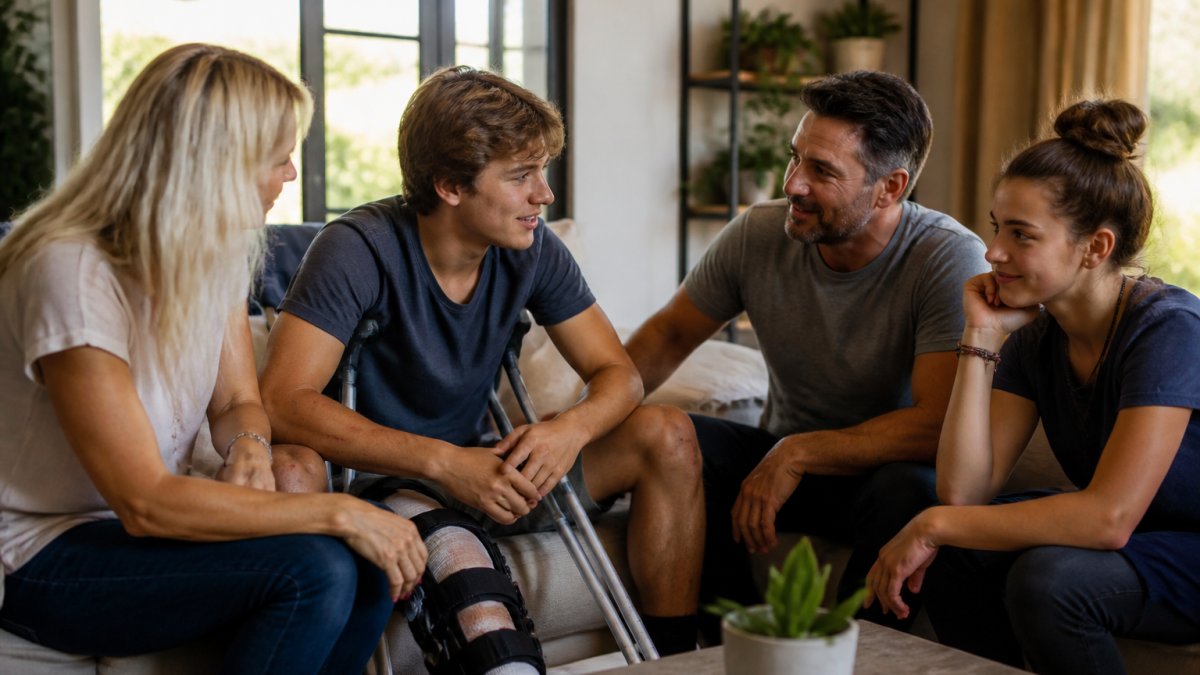
IFRRF recognizes families need more than financial help, spouses manage medical decisions, children struggle with a parent’s absence, parents watch their child fight through rehabilitation.
If a rider can’t work during recovery, household bills don’t pause.
IFRRF connects families with other racing families in similar situations through support groups and community events.
You can access family resources and support options through the family support page.
Community Fundraising for Injured Athletes
The racing community mobilizes quickly when one of its own gets hurt. Community fundraising generates significant resources that complement insurance and non-profit aid.
The cumulative effect fills gaps other funding sources leave.
Social media accelerates the response, posts spread quickly through racing networks, fans share campaigns, sponsors donate, and teams organize events, demonstrating the tight bonds within professional racing.
Learn about gifts in honor or memory as a fundraising contribution option through the gifts page.
Types of Expenses Covered and What Aid Actually Reaches Recipients
Racing injury aid covers different expense categories depending on the funding source.
Insurance typically covers:
- Acute medical treatment and hospitalization
- Surgery and emergency care
- Diagnostic imaging and lab work
Insurance often doesn’t cover:
- Rehabilitation and physical therapy beyond initial coverage
- Mental health counseling and psychological support
- Lost income from missed races and sponsorships
IFRRF and community aid fill these gaps.
The actual amount reaching recipients depends on need documentation.
Transparency matters here. IFRRF maintains clear records of how aid is allocated.
Some riders worry that accepting aid means losing control of their recovery decisions.
If you’re facing injury recovery, start by applying for racing injury aid immediately.
The racing community stands together after injury. IFRRF exists because riders understand what recovery costs and what families need. Get involved and explore how to apply for assistance through the Get Involved page.
| Expense Category | Insurance Covers | Insurance Does Not Cover | Non-Profit Aid Covers |
|---|---|---|---|
| Acute medical treatment and hospitalization | Yes | No | No |
| Surgery and emergency care | Yes | No | No |
| Diagnostic imaging and lab work | Yes | No | No |
| Rehabilitation and physical therapy | Partial | Beyond initial coverage | Yes |
| Mental health counseling | No | Yes | Yes |
| Lost income from missed races | No | Yes | Yes |
| Home modifications for disability access | No | Yes | Yes |
| Living expenses during recovery | No | Yes | Yes |
Frequently Asked Questions
How is financial aid distributed to injured racers?
Financial aid from racing injury assistance organizations flows through a structured process. After an injured racer’s application is approved, funds are distributed based on documented needs, medical expenses, lost income, rehabilitation costs, and living expenses. Organizations work directly with recipients to understand their situation and allocate resources where they’re needed most. Aid may be distributed depending on the organization’s policies and the racer’s circumstances.
What information is needed to request support after a racing accident?
Most racing injury assistance programs require proof of the accident, medical documentation, proof of professional racing status, identification, and details about financial hardship. While perfect documentation helps, many organizations work with riders whose records are incomplete or disorganized. You’ll need to provide information about your injury, current medical treatment, lost income, and immediate financial needs. Contact the organization directly if you’re unsure about your specific situation, many programs are flexible with riders facing complex circumstances.
Can a racer’s family receive support after a fatal accident?
Yes. Racing injury aid organizations recognize that fatal accidents create profound financial and emotional hardship for families. Families of deceased riders may receive assistance with funeral expenses, lost income replacement, and ongoing support for dependents. The application process and eligibility may differ from support for injured racers, but most established programs have specific provisions for families. Contact the organization to discuss your family’s needs and what support is available to you.
How long does it take to receive assistance after applying?
Processing time varies by organization and situation complexity. Simple applications with complete documentation may be processed within weeks, while more complex cases involving multiple injuries, disputed medical claims, or incomplete records may take longer. Emergency assistance is sometimes available faster for immediate needs. After approval, distribution timing depends on whether you receive a lump sum or ongoing payments. Ask the organization for a realistic timeline specific to your case when you apply.
