
Last Updated: November 20, 2026
Quick Summary
Meal support is the coordinated delivery of prepared food to an injured racer and their household during recovery. It works best when one organizer gets the family’s consent, builds a schedule, collects dietary needs, and assigns slots to willing friends and family.
- Most meal trains run three to four weeks with three to four meals per week.
- For a long hospital stay, extend the schedule but drop the frequency, such as two meals per week for six weeks.
- Collect dietary needs in writing and have the household contact confirm the list before the schedule opens.
- Ask volunteers to photograph each container label and send it to the organizer before delivery.
- Set a clear drop-off window and share only the details volunteers need for their task.
Table of Contents
- Why Meal Support Matters After a Racing Injury
- Step 1: Get Consent and Set Up a Meal Train for Accident Recovery
- Step 2: How to Manage Dietary Needs for Meal Trains
- Step 3: Best Meals to Deliver to Injured Friends
- Step 4: Meal Support Coordination Tools and Sign-Up Sheets
- Step 5: Food Safety and Delivery Logistics
- Beyond Food: Non-Meal Support and Privacy
- Building Your Support Network with IFRRF
- Frequently Asked Questions
Why Meal Support Matters After a Racing Injury
A crash changes everything in a single afternoon.
This is where meal support becomes one of the most practical forms of care a community can offer.
Meal support is the coordinated delivery of prepared food to an injured racer and their household during recovery.
The payoff is real. Below, we’ll walk through the full process, from getting consent to running deliveries safely.
Step 1: Get Consent and Set Up a Meal Train for Accident Recovery
Never build a schedule before the family says yes. Some people want help. Others find a public food train overwhelming, especially in the first days after a crash.
Start with a private message or call to the closest family member or the racer’s partner. Ask one simple question: “Would a meal train help right now?” If the answer is no, offer alternatives instead, like gift cards or grocery delivery.
Once you have a green light, confirm three things before you build anything:
- Who is the main contact for the household
- How many people are eating, including visiting family
- Which platform the family prefers for updates
What to Ask Before You Build the Schedule
A good organizer gathers details first and builds second. Ask about food preferences, allergies, and any meals the family already has stacked in the freezer. Ask about the best drop-off window too. A racer recovering from surgery may sleep odd hours, and a doorbell at the wrong time costs everyone.
Choosing a Schedule Length and Meal Frequency
Most meal trains run three to four weeks with three to four meals per week. That pace covers the hardest stretch without wearing out volunteers.
For a serious injury with a long hospital stay, extend the schedule but drop the frequency. Two meals per week for six weeks beats five meals per week for two weeks, because it spreads the help across the whole recovery arc.
Here are the schedule basics to settle before you build a meal train.
| Item | Guidance |
|---|---|
| Typical schedule length | Three to four weeks |
| Typical meal frequency | Three to four meals per week |
| Long hospital stay | Extend schedule, drop frequency |
| Long-stay example | Two meals per week for six weeks |
| Confirm before building | Main household contact |
| Confirm before building | How many people are eating |
| Confirm before building | Platform the family prefers |
Step 2: How to Manage Dietary Needs for Meal Trains
Dietary needs are where most food trains fall apart. One missed allergy note and a well-meaning casserole becomes a medical problem. The fix is to treat dietary collection as a short intake process, not a group chat guess.
Collect needs in writing, not by memory. A shared note or form works well. Record allergies first, then preferences, then texture or temperature limits.
Racer-Specific Dietary Constraints
Beyond general recovery, watch for constraints that are common in crash recovery and rare in ordinary meal trains:
-
Facial or jaw injuries. Soft and blended foods, room-temperature dishes, and straw-friendly options may be necessary. Confirm with the household contact rather than assuming.
-
Swallowing or texture limits. If the racer has been evaluated for swallowing difficulty, follow the care team’s texture guidance exactly and do not improvise.
-
Clinician-directed diets. If a physician or dietitian has prescribed a diet, the organizer should ask the household contact for the specifics in writing and pass only the necessary details to volunteers.
A common pattern is for the household contact to hold the full medical picture and give volunteers only what they need to cook safely.
Watch out: never guess at an allergy or a prescribed diet. If a volunteer isn’t sure whether a dish contains a trigger ingredient or fits a clinician’s guidance, they should label it clearly or pick a different recipe.
A Labeling Standard Every Volunteer Can Follow
A simple labeling rule solves most confusion. Every container gets a note with:
- The dish name
- The main ingredients, including common allergens
- The date it was made
- Reheating instructions
- A line for texture notes, such as “soft” or “contains nuts”
Ask volunteers to photograph the label and send it to the organizer before delivery. That single habit catches most labeling gaps before the food reaches the door.
Step 3: Best Meals to Deliver to Injured Friends
The best meals to deliver to injured friends are dishes that reheat well, travel safely, and need almost no effort from the recipient. Think one-pot meals, baked pasta, soups, and pre-portioned freezer dishes.
Skip anything that needs last-minute assembly. A taco kit sounds fun until the recipient is alone, sore, and out of energy. Instead, favor:
- Frozen meals in single portions the family can reheat on demand
- Pre-prepped ingredients like washed produce and cooked proteins
- Ready-to-eat food such as sandwiches, wraps, and grain bowls
- Healthy snacks like trail mix, nuts, crackers, and cut-up fruit for between-meal energy
Racer-Specific Recovery Needs
Racing injuries often involve bones, joints, and long rehab. Protein helps the body rebuild tissue, and hydration matters more than most people realize. Calcium and vitamin D support bone healing, so dairy, fortified foods, and leafy greens earn a spot.
Rehab also burns energy. Keep easy snacks within arm’s reach of the couch or bed, because getting up to the kitchen may be the hardest part of the day.
Step 4: Meal Support Coordination Tools and Sign-Up Sheets
The right coordination tool keeps everyone on the same page.
Pick one platform and stick with it. A simple shared calendar works for small groups. For larger communities, use a dedicated sign-up sheet with slots by date and meal type.
A few organizer habits keep things smooth:
- Assign a backup for each slot in case someone cancels
- Send a reminder the day before each delivery
- Post a weekly update so volunteers see what’s still open
- Keep a running list of what’s already in the freezer
Watch out: don’t let two people claim the same night. Double deliveries waste food and clog the fridge while other nights sit empty.
Step 5: Food Safety and Delivery Logistics
Food safety is the quiet part of meal support that nobody talks about until something goes wrong.
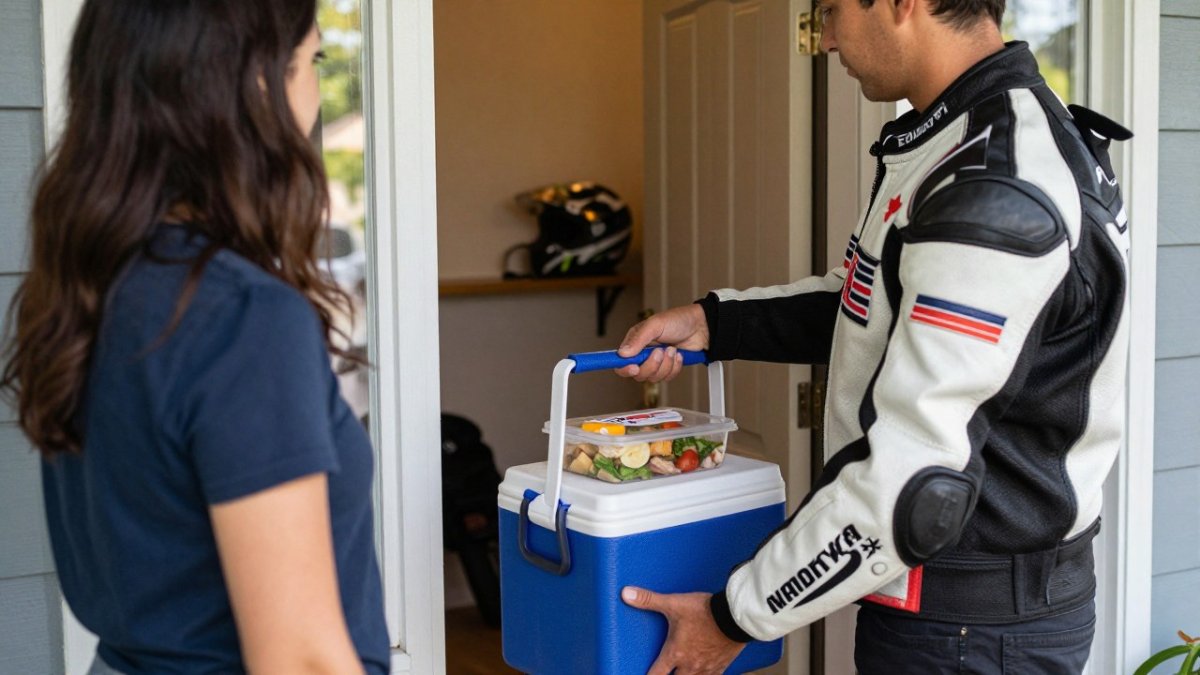
Use insulated bags or coolers for the trip. Keep raw and cooked items separate. If the drive is longer than an hour, pack cold dishes with ice packs.
Delivery logistics matter just as much. Set a clear drop-off window, agree on the handoff method, and respect the family’s privacy.
A short delivery checklist covers the basics:
- Confirm the drop-off window with the family contact
- Pack hot and cold items separately
- Include reheating instructions on every container
- Text the contact when the food is at the door
- Note what was delivered so the schedule stays accurate
Beyond Food: Non-Meal Support and Privacy
Food is only one piece of the puzzle. Injured racers and their families often need rides to appointments, help with laundry, childcare, or simply someone to sit with them during long hospital days. Ask what would actually help before assuming, and build a second, separate sign-up for non-food help so the meal schedule stays clean.
A Non-Meal Support Menu
Offer the household a short menu of concrete options rather than an open-ended “let me know if you need anything.” Most families find it easier to check a box than to write a request. Useful categories include:
- Groceries and household supplies. A weekly grocery run or a delivery order covers gaps when cooked meals are unsuitable, and it lets the family choose what they actually want to eat.
- Meal delivery credits. Gift cards to a delivery service or a local restaurant give the family flexibility on nights when a reheated casserole is the last thing anyone wants.
- Transportation. Rides to medical appointments, physical therapy, or the pharmacy, especially when the racer cannot drive.
- Household help. Laundry, yard work, pet care, and basic cleaning.
- Childcare and elder care. Coverage during hospital visits or appointments.
- Company. A scheduled visit or a phone call at a set time, which is easier to accept than an open invitation.
Assign each category to one volunteer so no single person is fielding every request. A shared sign-up with slots by date and task works as well for rides as it does for meals.
Privacy and Consent
Privacy deserves the same care as food safety. Do not post the racer’s medical details, home address, or schedule in a public group without permission.
A workable pattern is to give volunteers only the information they need for their task: the drop-off window, the dietary constraints relevant to their dish, and a single contact name.
Watch out: a well-meaning update thread can become a source of stress.
Communication Rhythm
Set a communication rhythm and stick to it. One weekly update from the organizer, one reminder the day before each delivery, and one private channel for the household contact covers most needs.
For families who need more than meals, our Family Support resources cover practical and emotional help beyond the kitchen. And if a friend would rather give financially than cook, they can Donate to support injured racers and their households directly.
Building Your Support Network with IFRRF
A meal train works best when it connects to a wider circle of care. That’s the role IFRRF plays for the racing community.
If you’re organizing help for a rider, you don’t have to do it alone. Rally your wider network through our Get Involved page, or give the racer a lasting connection to the community by helping them Become A Member. To coordinate directly with our team about a specific situation, reach out through our Contact Us page.
A crash tests a community as much as it tests a rider. The families who get through it best are the ones surrounded by people who show up, week after week, with a warm meal and no fuss.
Frequently Asked Questions
What are the best digital tools to organize a meal support schedule for an injured racer?
Free sign-up tools like MealTrain, SignUpGenius, and TakeThemAMeal let you build a calendar, list dietary notes, and let volunteers claim slots without repeated texts. Add a shared spreadsheet or group chat for delivery updates. Keep one coordinator as the single point of contact so the family is not fielding dozens of messages while recovering.
How do you handle dietary restrictions when organizing meal support?
Ask the family or caregiver for a short list of allergies, restrictions, and strong dislikes before the schedule opens. Post it at the top of the sign-up page and on a printed checklist for drop-off. For meal trains, flag the big eight allergens (milk, eggs, fish, shellfish, tree nuts, peanuts, wheat, soy) and ask volunteers to label containers with ingredients so the recipient can check before eating.
How long should a meal support schedule last after a serious accident?
Most organizers plan for three to four weeks at three to four meals per week, then reassess. Recovery from a serious racing injury often runs longer than the initial hospital stay, so build in a review point at the two-week mark. If the family still needs help, extend in shorter blocks so volunteers do not burn out early.
What are some alternatives to home-cooked meals for injured racers?
Restaurant gift cards, takeout delivery, frozen meals, and ready-to-eat grocery orders all work well and reduce food safety risk. Gift cards give the family control over timing and preferences. Frozen and pre-prepped meals let them eat when appetite returns after a long rehab day. Mix formats across the schedule so the family is not eating the same type of food every night.
